Showing posts with label history. Show all posts

Tuesday, October 11, 2011

Currently reading... 1776


Long overdue - currently reading 1776 by historian David McCullough.

Currently on p. 80, and as with all of McCullough's books, 1776 is engaging from the very beginning, as he seemlessly meshes the broad sweep of events with the little details of the time.

"New England men were also averse to washing their own clothes, considering that women's work. The British included women in their army - wives and other so-called camp followers, some of whom were prostitutes - who did the washing, but that was not the way with the New Englanders." (p. 31)

All too often we read of generals, and strategies, and great battles (and those are all here, of course), but what brings history alive are the stories of everyone involved. McCullough is a master at what has become known as "popular history" - which is really, after all, our history.

Paul Kimball

Wednesday, August 17, 2011

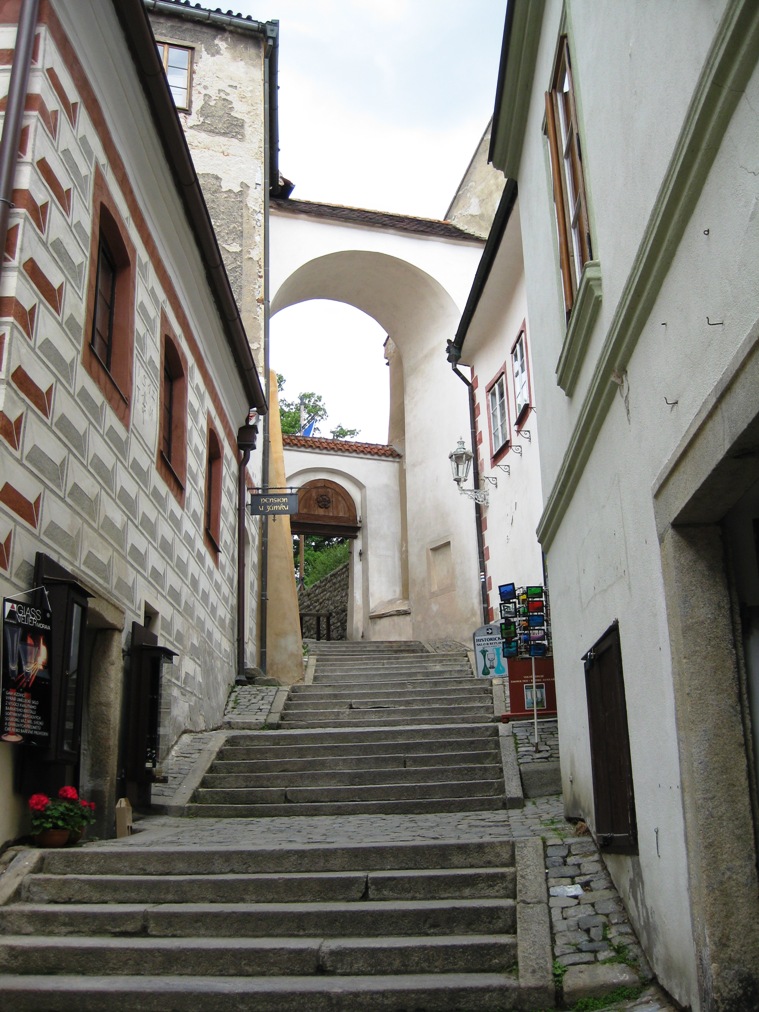
Walkabout - Český Krumlov, June 2009

After three weeks visiting England and Scotland in May, 2009, I flew to the Czech Republic where I spent the last week and a half of my vacation. For most of the time I was based in Prague, with day trips to places like Kutna Hora and Terezin, but I also spent a couple of days in Český Krumlov, a beautiful town and UNESCO World Heritage Site about three hours south of Prague best known for the fine architecture and art of the historic old town and Český Krumlov Castle.

Here are some of the photos from my walkabouts during those wonderful two days.

The train station.

The sign for the inn, or "pension", at which I stayed.

The pension. It was like staying in a wizard's tower!

The castle.

One of the many streets.

A hotel near the town square.

Town square.


Having lunch at a restaurant overlooking the town square.

The Horor Bar was my bar of choice for late night
carousing while I was in Český Krumlov. It never closes!

A unique fountain.

View of Český Krumlov from the Castle tower.

Another look from the tower.

Yours truly on the balcony of the tower.

Another view of the Castle.

Inside the Castle, they had a really unique underground
gallery with an equally unique exhibit.

This exhibit reminded me of something
out of classic Star Trek!

You don't want to know what this
piece reminded me of!!

On the castle walls.

One of the many winding alleyways.

Self portrait.

A wonderful antique shop that I spent at
least half an hour browsing through.

Statue of Christ on Lazebnický Bridge.

As an afficiando of teddy bears, I popped into this
wonderful shop... and picked up a couple of new friends.


Dinner at a riverfront restaurant, which a touch
of Americana (Pepsi) and a locally-made toy
that I bought for a friend in Canada.

The restaurants on the river.

Another view of the castle.

Another charming and friendly little bar.

Český Krumlov at night.

The castle at night.

Town square at night.

If you ever get the chance to visit Český Krumlov, make sure you take it - it's a true adventure, full of history, mystery, great bars and restaurants, and, perhaps best of all, nooks and crannies that hold all sorts of surprises.

Paul Kimball

Thursday, August 11, 2011

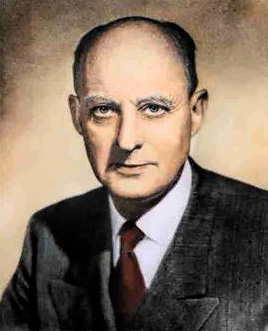
Illusions of Managing History: The Enduring Relevance of Reinhold Niebuhr


A superb lecture by Andrew Bacevich of Boston University (author of The New American Militarism: How Americans are Seduced by War and The Limits of Power: The End of American Exceptionalism) on the enduring importance of Reinhold Niebuhr on American political thought.

Niebuhr was very influential on Lyndon B. Johnson and many members of his administration when they were designing the Great Society, even as Niebuhr became a vocal critic of the Vietnam War. He attacked the materialism, complacency and conformity that he saw permeating post-war America in the 1950s and 1960s. The root of sin, he reminded Christians, was self-love, and the selfishness that goes along with it, both as individuals and as societies.

I think there ought to be a club in which preachers and journalists could come
together and have the sentimentalism of the one matched with the cynicism
of the other. That ought to bring them pretty close to the truth. 
-Reinhold Niebuhr 
Niebuhr was a complex man, and, as Bacevich notes, he defies easy categorization. He offered a critique of religious liberals over what he called their naive views of sin and the optimism of the Social Gospel. At the same time,  he rebuked religious conservatives for what he saw as their naive view of the Bible and their narrow definition of "true religion."

In our era of rampant and conspicous consumerism, increasing American exceptionalism (to an almost messianic level), American military adventurism in foreign affairs, and our love of self (one can only imagine what Niebuhr would have thought of "reality TV", and our growing obsession with "fame"), Niebuhr's work is more relevant than ever - a point that Professor Bacevich makes with both clarity and passion in this thought-provoking lecture.

Paul Kimball

Wednesday, August 3, 2011

Thought du jour - 3 August 2011


"Political history is far too criminal and pathological to be a fit subject of study for the young.  Children should acquire their heroes and villains from fiction." - W. H. Auden

Sunday, July 31, 2011

Thought du jour - 31 July 2011


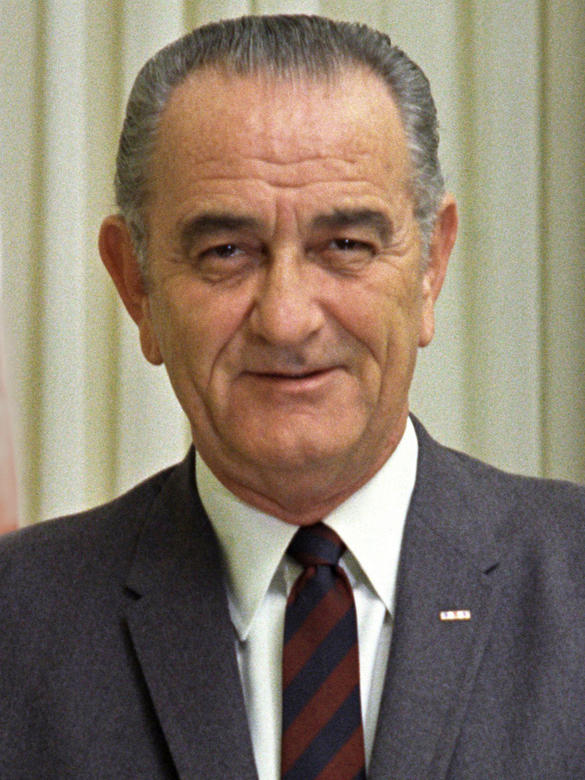
"If future generations are to remember us more with gratitude than sorrow, we must achieve more than just the miracles of technology. We must also leave them a glimpse of the world as it was created, not just as it looked when we got through with it." - Lyndon B. Johnson

I consider Johnson one of the great figures of the 20th century. Bookended by Kennedy and Nixon, it was an era of Shakespearean sweep, and tragedy. Of the three, it was Johnson who accomplished the most. He was one of the truly transformational figures in American history, but he remains overshadowed by the men who came before and after him, neither of whom could match his record of accomplishment, or his character. Most of all, however, he remains defined by a war that he neither started, nor finished, and certainly did not want. In the long run of history, however, after Vietnam recedes from memory, I am convinced that Johnson's vision of the Great Society is what will endure.

Paul Kimball